| letter.grade | percentage | grade.point |
|---|---|---|
| A+ | 90-100 | 4.3 |
| A | 85-89 | 4.0 |
| A- | 80-84 | 3.7 |
| B+ | 77-79 | 3.3 |
| B | 73-76 | 3.0 |
| B- | 70-72 | 2.7 |
| C+ | 67-69 | 2.3 |
| C | 63-66 | 2.0 |
| C- | 60-62 | 1.7 |
| D+ | 57-59 | 1.3 |
| D | 53-56 | 1.0 |
| D- | 50-52 | 0.7 |
| F | Below 50 | 0.0 |
Teaching, Learning, and AI
Colin Madland, Derrick Mohamed
2026-01-15
Welcome
Assessment Triangle
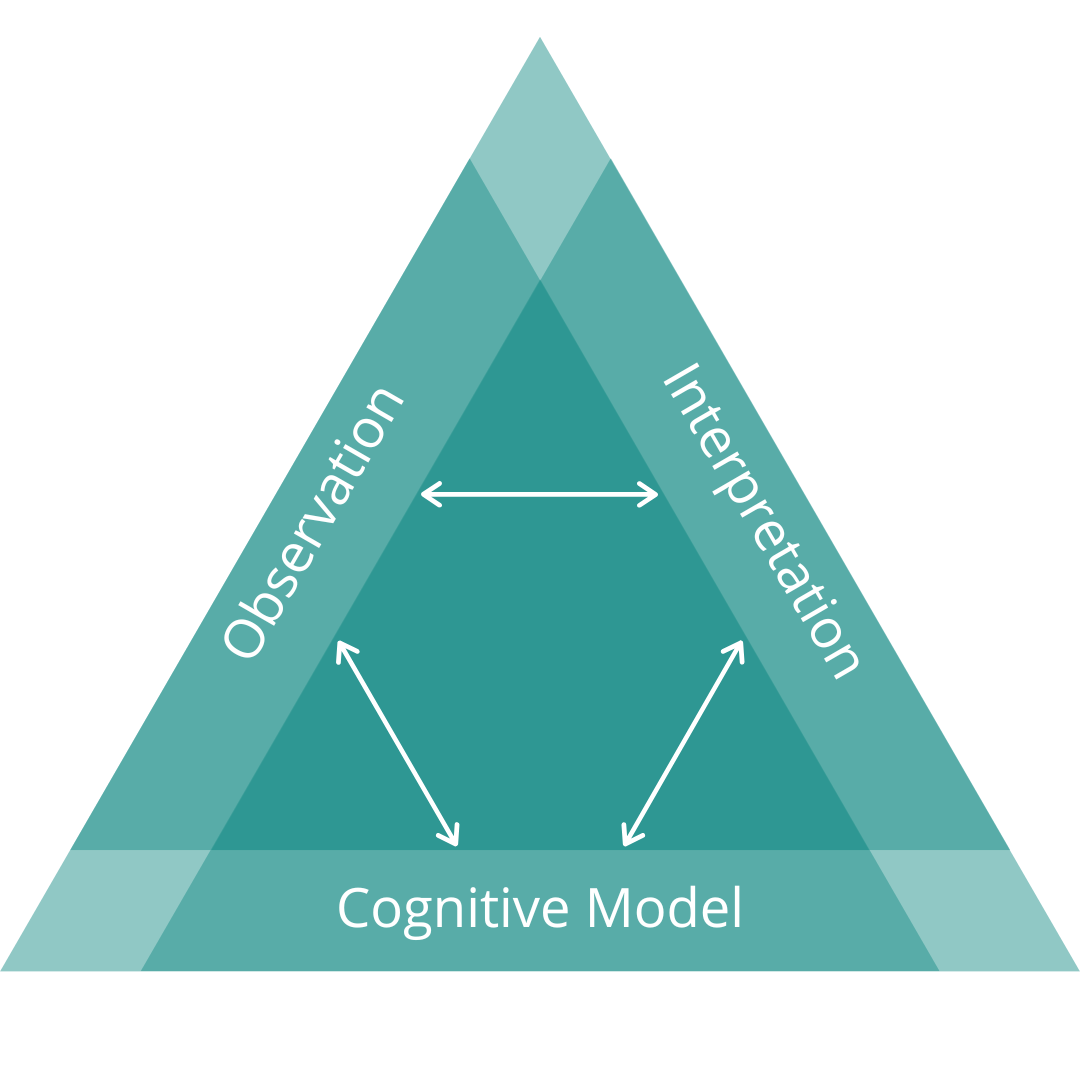
Purposes of Assessment…
…of learning
…for learning
…as learning
Teaching, learning, and assessing are all ontological
Assessment Identity
beliefs | feelings | knowledge | skills
Agency in Assessment
Percentage Equivalents
Data Types
flowchart LR
A((Data)) --> B(Qualitative - non-numerical)
A --> C(Quantitative - numerical)
B --> D(Nominal)
B --> E(Ordinal)
C --> F(Interval)
C --> G(Ratio)
| Data Type | Mean | Equidistant | True Zero |
|---|---|---|---|
| Nominal | ❌ | ❌ | ❌ |
| Ordinal | ❌ | ❌ | ❌ |
| Interval | ✅ | ✅ | ❌ |
| Ratio | ✅ | ✅ | ✅ |
GRADE DATA IS ORDINAL!
- averages don’t make sense
- no true zero
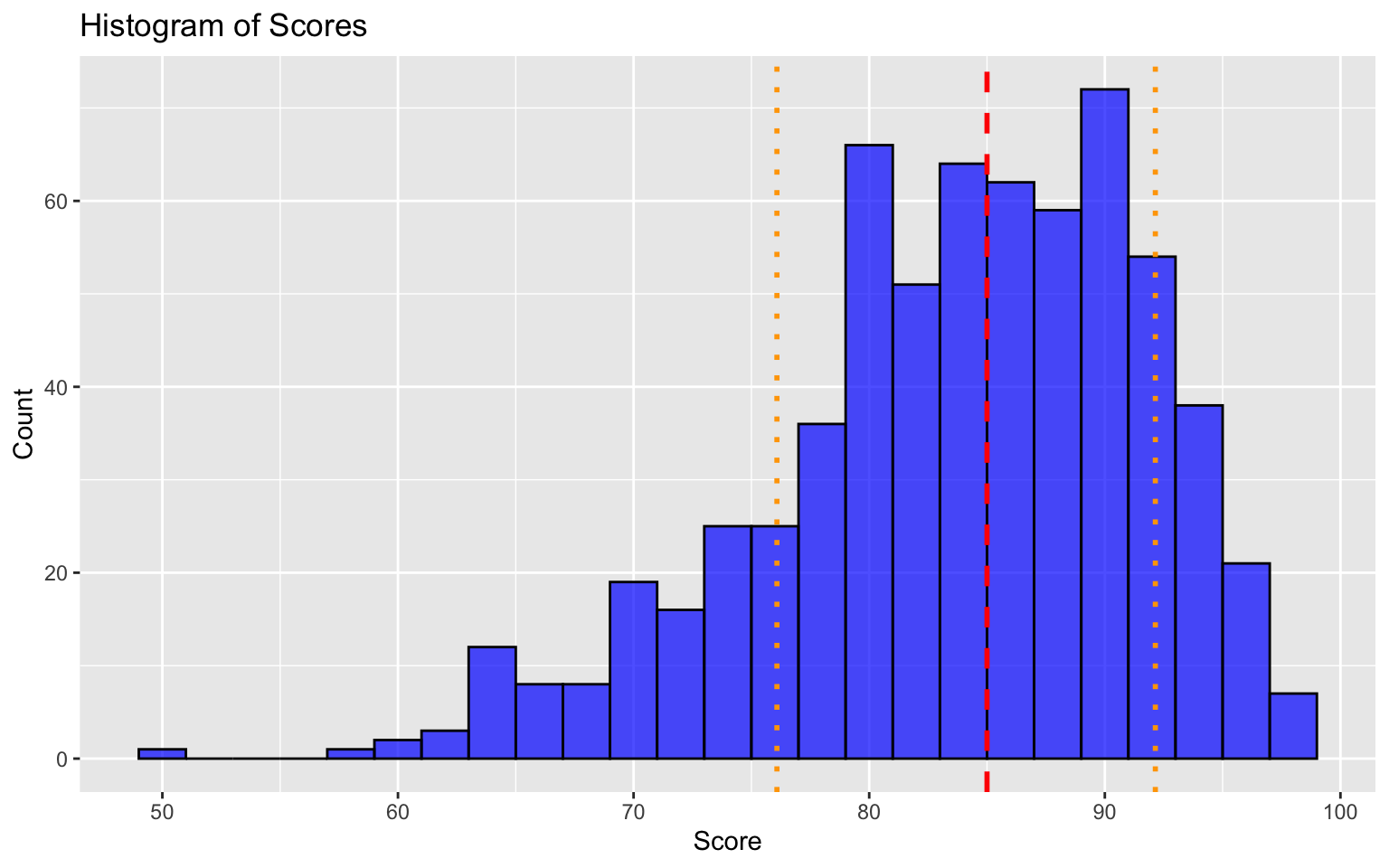
Reliability of Grades
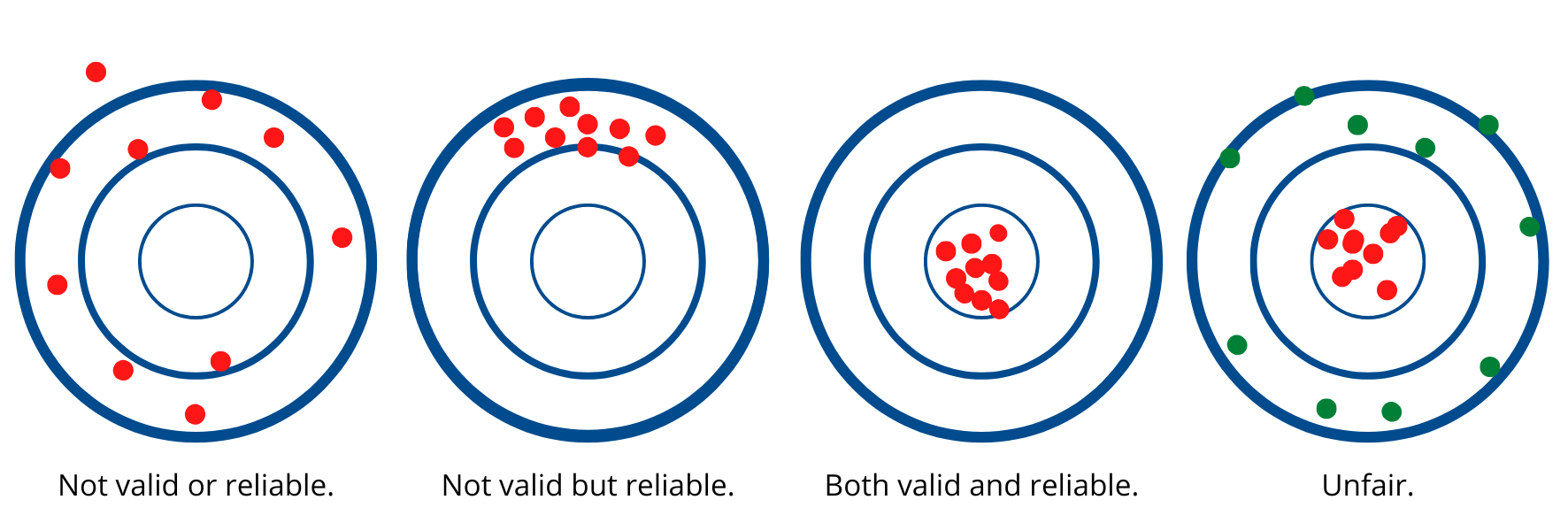
AI and Validity of Grades
Mega Breakouts - an Unconference Experience
- Instructions at the top of the doc
Knowledge emerges only through invention and re-invention, through the restless, impatient, continuing, hopeful inquiry human beings pursue in the world, with the world, and with each other. (Freire, 1990, p. 72)
Stop. Be outside. Think.
cmad.land - slides
References
Earl, L. M. (2013). Assessment as learning: Using classroom assessment to maximize student learning (Second edition). Corwin Press.
Freire, P. (1990). Pedagogy of the oppressed. Penguin.
Looney, A., Cumming, J., van der Kleij, F. M., & Harris, K. (2017). Reconceptualising the role of teachers as assessors: Teacher assessment identity. Assessment in Education: Principles, Policy & Practice, 25, 442–467. https://doi.org/10/gfkfk6
Pellegrino, J. W., Chudowsky, N., & Glaser, R. (2001). Knowing What Students Know: The Science and Design of Educational Assessment. National Academies Press. https://doi.org/10.17226/10019
Starch, D. (1913). Reliability and Distribution of Grades. Science, 38(983), 630–636. https://doi.org/10.1126/science.38.983.630
Starch, D., & Elliott, E. C. (1912). Reliability of the Grading of High-School Work in English. The School Review, 20(7), 442–457. https://doi.org/10.1086/435971

colin.madland@twu.ca | TWU Faculty Professional Learning Seminar